Five tips for getting your energy saving off to a strong start
From taking the right action at the right time to understanding your priorities, here we share our top tips and resources for getting your energy saving off to a great start.
To help schools save as much energy as possible (and to reduce the burden of planning) we’ve put together this handy annual cycle graphic. This guides you through which activities to focus on each term to maximise your impact.
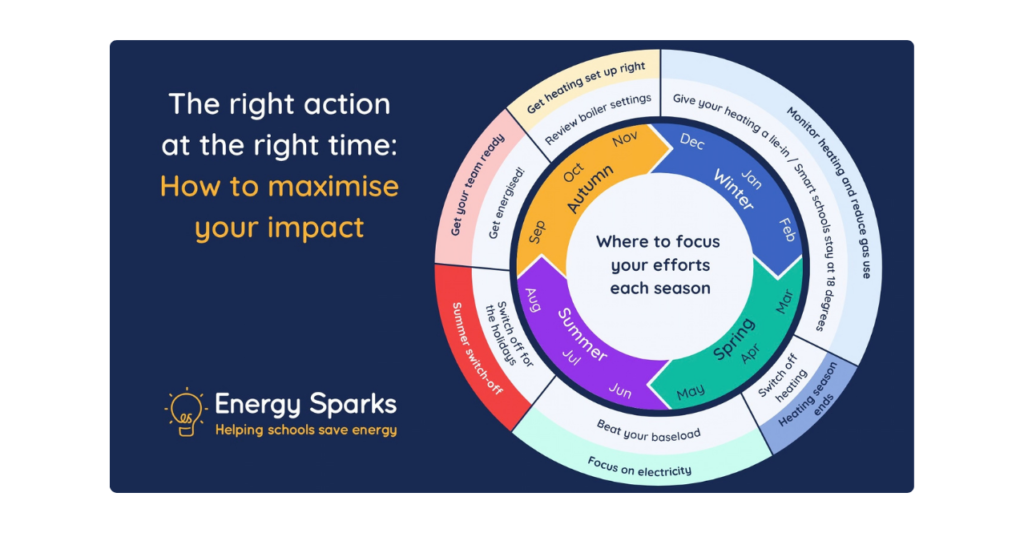
Feel free to share this with others – you may even want to print it out and pin it up at school. The majority of the activities and actions we suggest can be completed by any school – whether or not they have an Energy Sparks account.
As shown in the graphic, at the start of the school year we recommend that schools focus on getting your energy saving team set up and motivated.
Below are our top tips and resources to help with this…
1. Help people understand why saving energy is important
Our motivational video is designed to put the heart into energy saving. It explains in simple terms why taking action at school really matters for our planet and its people. You might want to consider showing this at a staff meeting, or perhaps at your next eco-team meeting.

2. Complete our ‘Get Energised!’ programme
Our Get Energised programme will help you understand when your school is using energy, what your priorities are, and how to get your team set up for success.
Although a couple of the activities are designed to help Energy Sparks schools get familiar with their Energy Sparks data, the majority can be completed by any school.
3. Take a look at your prioritised opportunities table
Your prioritised opportunities table gives you insights into where you can make the biggest savings. You can find this by navigating to your school’s adult dashboard and clicking on the ‘Energy saving opportunities’ button. It should look something like this:
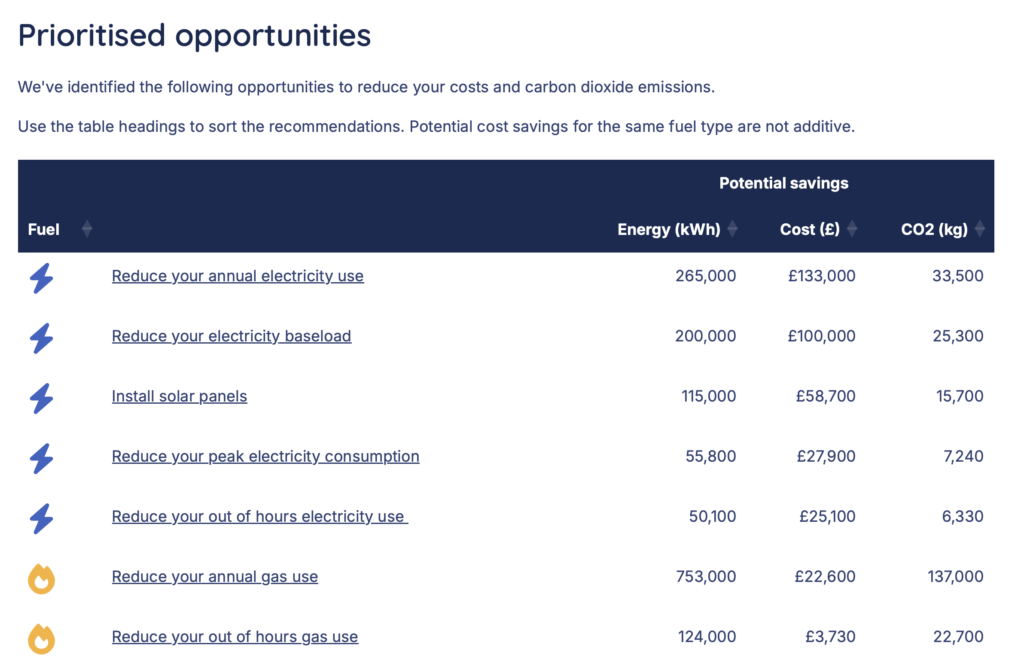
Your table will show you where you can make the biggest potential savings (you can sort it by potential energy saving in kWh, by cost, or by CO2 reduction). For example, this school’s table suggests that they could save as much as £100,000 and 25,300 kg CO2 by reducing their electricity baseload.
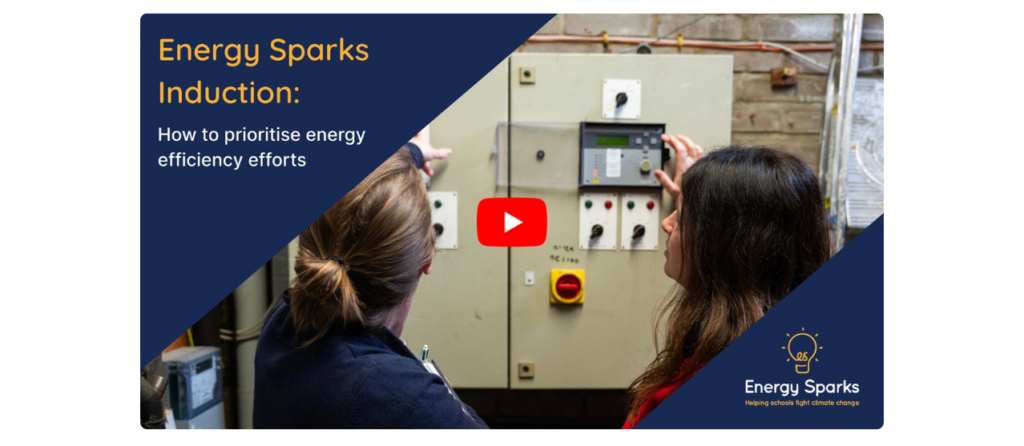
For more ideas on how to prioritise your efforts, you could watch our short video, or take inspiration from Horsford Primary – Holt Road, who followed a cycle of investigating the issues, setting goals, taking action and assessing progress.
4. Set a target
“What gets measured, gets done”, or so goes the old maxim. Energy Sparks allows you to set energy saving targets and track progress through the year.
If you’re not sure what a sensible target looks like, take a look at this article by Nikki Webb.
5. Tap into your students’ competitive spirit
Our annual scoreboard competition offers the chance of honour, glory (and prizes) for schools that record what they are doing and save energy.
Find out what prizes we are offering this year.
Inspiration time!
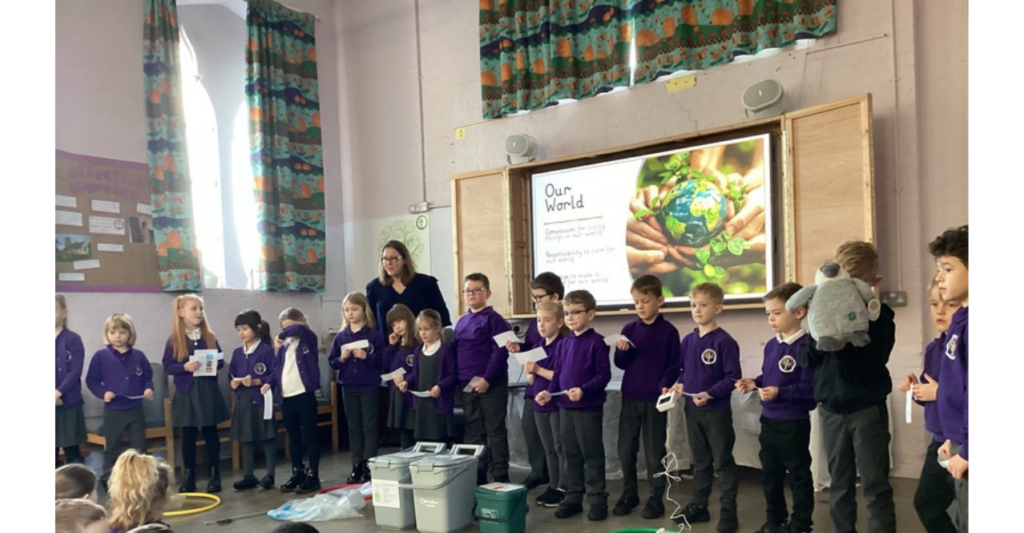
Getting the whole school to join in with energy saving can be a challenge at many schools, but we absolutely love how Horsford Primary – Holt Road (last year’s Pupil Power award winners) have approached this:
“Eco-Team led an assembly, explaining about the different roles they have (e.g. turning off the lights, emptying the recycling bins, litter picking, checking temperatures of classrooms).
“They also introduced our school mascot ‘Perry the Penguin’ who will be awarded to the class who does the best at helping with turning off lights, keeping doors shut and putting recycling into the correct bin.
“The Eco-Team will discuss and identify the class each week [by monitoring the classes to see which classes are remembering to turn off lights, shut outside doors and keep the temperature at around 18 degrees] and we will award this in celebration assembly each week.
“We will also move that class up on our Eco-Team display board to keep track of how each class is doing.”
We think this is a phenomenal idea – and one that any school can replicate!
For more inspiration why not read this interview with Horsford Primary, in which they discuss how your eco-team can help you make small changes that really add up.
