Inspiration time! Horsford Primary – Holt Road
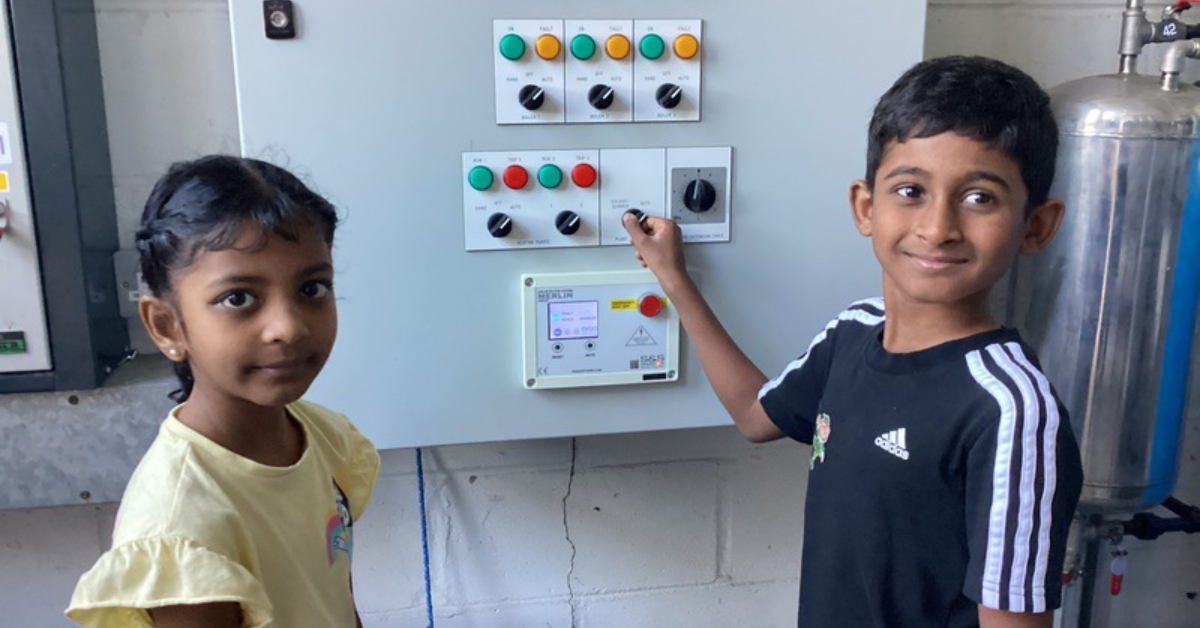
We often talk about the importance of working as a team to achieve energy savings, and we think there could hardly be a more inspiring example than at Horsford Primary – Holt Road. Take a look!
In a recent newsletter, we mentioned the amazing work that pupils and staff at Horsford Primary – Holt Road have been doing to identify and tackle energy waste at their school this year.
Their work has been so brilliant, in fact, that we wanted to share a bit more detail, because many schools – both large and small – can learn from their approach, which exemplifies how to get the most out of Energy Sparks.
When this school joined us in September 2024, their gas use was about average compared to similar schools, and their electricity use was better than average.
And yet, they have still managed to make some massive savings in the year running up to March 2026:
- Gas use has come down by 35% putting them into our top 30% of schools
- Electricity use is down by 9%, they’re now one of our lowest electricity users compared to other schools of a similar size.
We estimate that in that period they have saved over £1,500 and more than 5 tonnes of CO2 compared to the previous 12 months, through their energy saving efforts.
Laying the foundations for success
One of the first things that Horsford Primary did this year was to set up a new Eco-Team. They also voted in energy monitors for each class to check lights and doors.
Pupils and staff at Horsford had the benefit of participating in an Energy Sparks workshop, during which students had the opportunity to use a thermal camera to understand where the school is losing heat.
They also got to learn more about climate issues and how they can help save energy and reduce school bills!
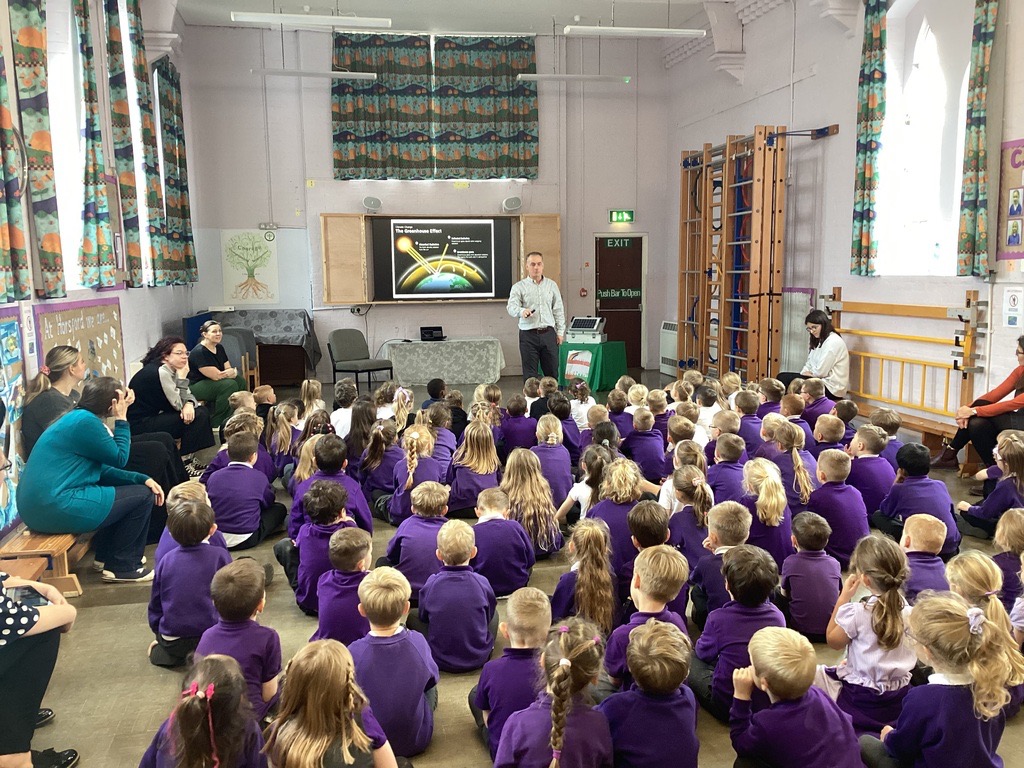
We always say that saving energy is a community effort, and for Horsford Primary it certainly seems like their initial work to get a strong team set up and raring to go laid the foundations for success…
The path to energy savings
One of the things we love the most about Horsford Primary’s activity is that they have followed a methodical approach to energy saving, starting with understanding what the issues are at their school and setting targets, followed by carefully chosen actions and then – crucially – monitoring their impact.
The illustration below shows this ideal cycle.
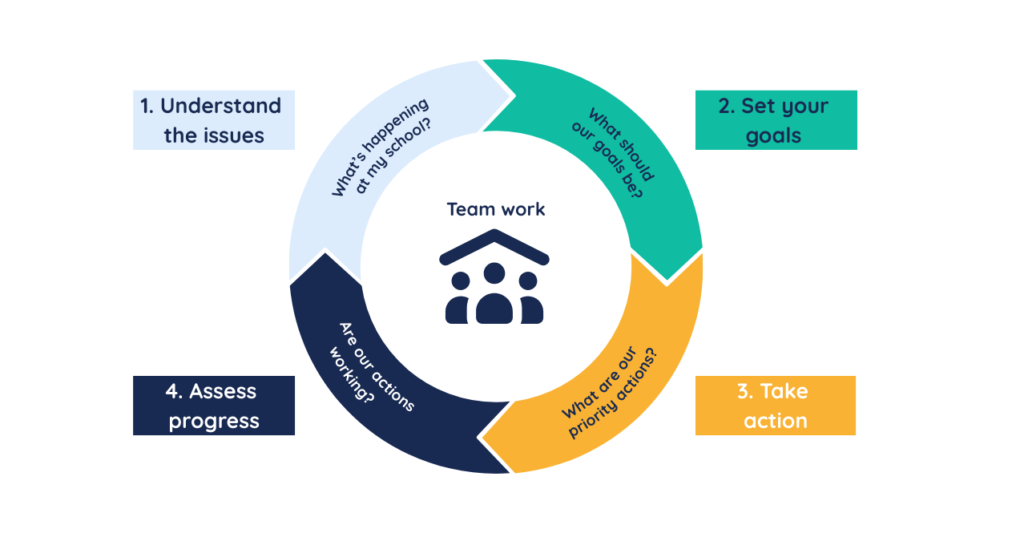
Keep reading for inspiration from Horsford, and learn how they have used and adapted Energy Sparks activities at each stage of this cycle.
1. Understanding the issues
The first stage of the process is all about understanding when your school is using energy, and identifying opportunities to make savings.
At Horsford Primary, students got started by carrying out some important investigations, including:
- Conducting a spot check in each room at school to check if the lights were on. If the rooms were unoccupied, the lights were turned off.
- Looking at their school electricity use for a day on Energy Sparks, and seeing how this varied throughout the day. Students also asked the teachers questions about when they arrive and leave, and about the equipment they use. This included designing and carrying out a teacher questionnaire (take a look here).
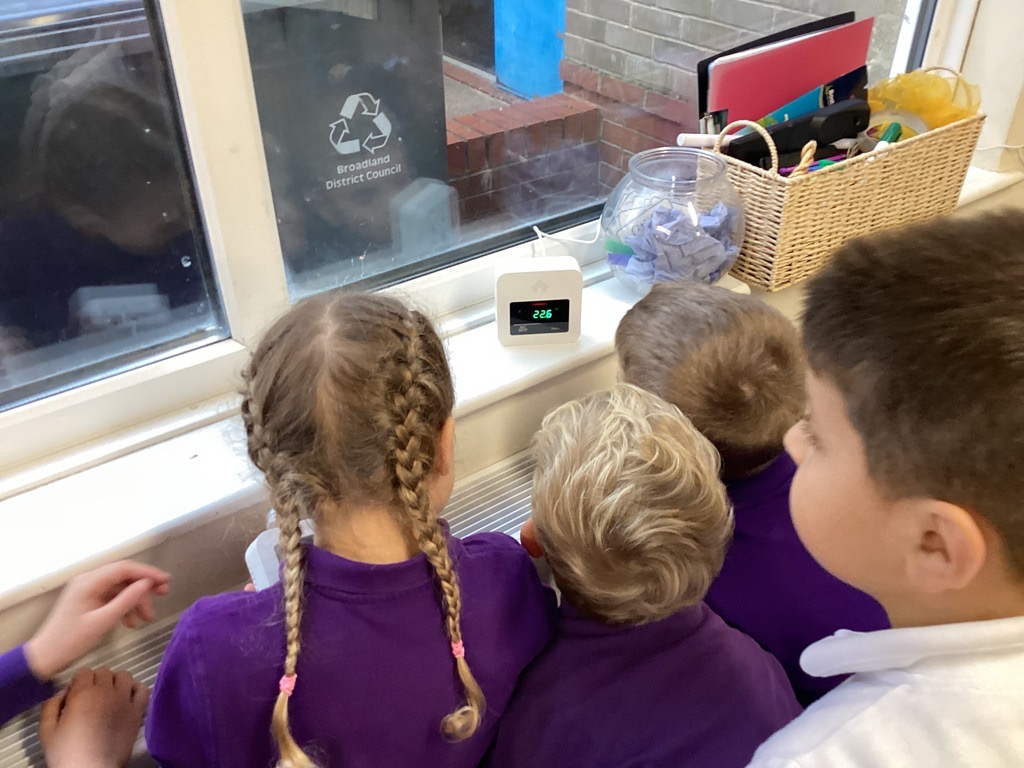
- Putting thermometers in each of the classrooms, and using these to monitor temperatures (great forward planning!).
- Learning about the school’s electricity baseload, identifying items that need to be on the whole time and those items that can be turned off.
2. Setting goals
The second stage of the cycle entails taking the information you have gathered, and using this to make informed decisions about what you want to achieve.
At Horsford Primary, pupils and staff took this to the next level by setting a target to reduce their energy use by 5%.
Learn more about how to set an energy-saving target at your school.
3. Taking action
Now that you have a good understanding of what is happening at your school, and have set yourself some goals or targets, it’s time to start taking action around your school!
This can be the time for your students to really shine – developing leadership and other core skills as they go.
Here are some highlights from Horsford Primary, in their own words:
- “We labelled the lights using a green sticker when we could turn off the lights, orange stickers to check with the teacher if we could turn them off and red to show that they need to be left on.”
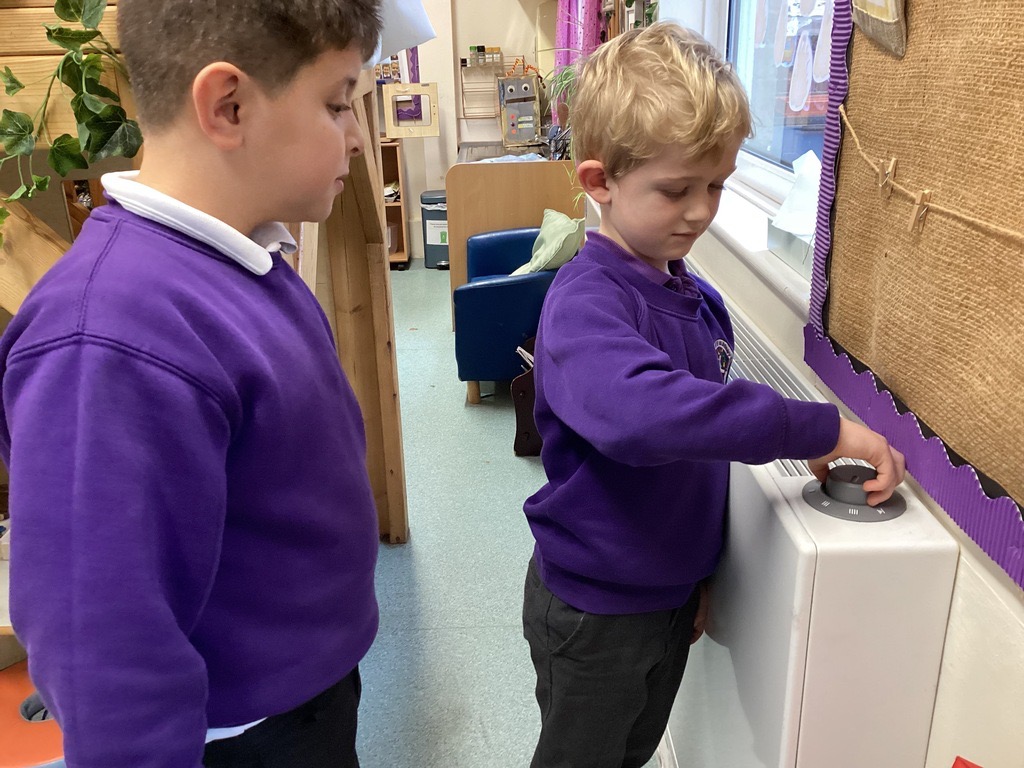
- “We looked at the different radiators in school and talked about how we can adjust the temperature by changing the number (between 1-4) if it is too hot.”
- “We created a list of things that need turning off at playtimes and lunchtimes, laminating this and displaying it in each room. We set up a group in the Eco-Team to check these at playtimes and lunchtimes.”
- “We went around the classroom, checking to see if the windows and doors were shut. They all were. We talked about the importance of keeping the warm inside and the cold outside.” (We love how this activity wove together action and learning.)
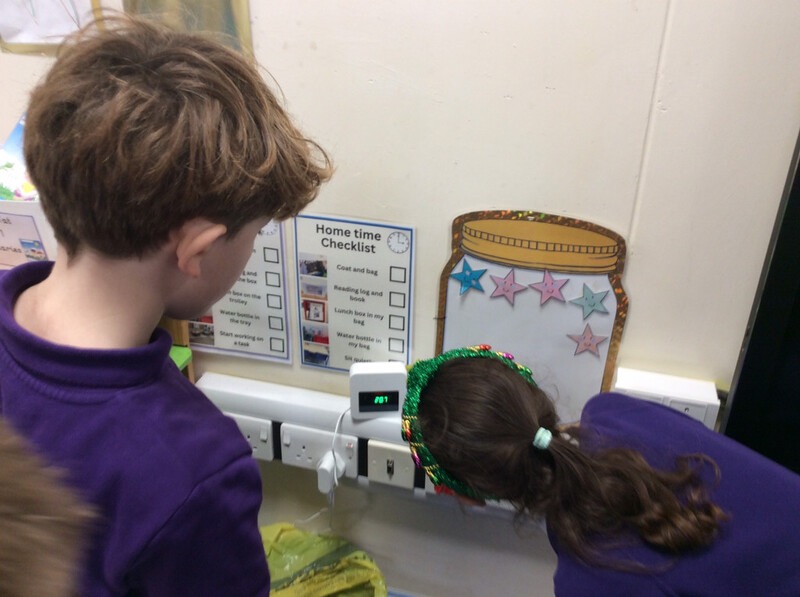
- “We created an end of term switch-off list (as well as other jobs like emptying the bins etc) and the children helped to work our way through the list, making sure everything that could be turned off was. We turned the boiler onto holiday mode.”
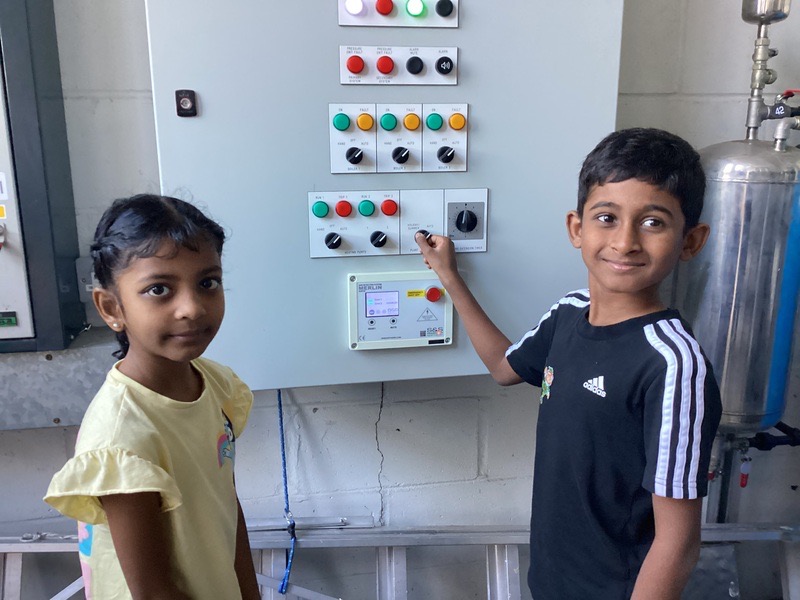
- “We talked about the thermometers we put in the classroom last week and I explained that we want to make sure all the classrooms are a good temperature, ideally around 18 degrees, so we need to monitor what the different classrooms are. We talked about being able to adjust the temperature on the heating if it was too hot. As a team we went around each classroom, logging the temperature, before talking.”
Pupil leadership – Perry the Penguin
Getting the whole school to join in with energy saving can be a challenge at many schools, but we absolutely LOVE how Horsford Primary have approached this:
“Eco-Team led an assembly, explaining about the different roles they have (e.g. turning off the lights, emptying the recycling bins, litter picking, checking temperatures of classrooms).
“They also introduced our school mascot ‘Perry the Penguin’ who will be awarded to the class who does the best at helping with turning off lights, keeping doors shut and putting recycling into the correct bin.
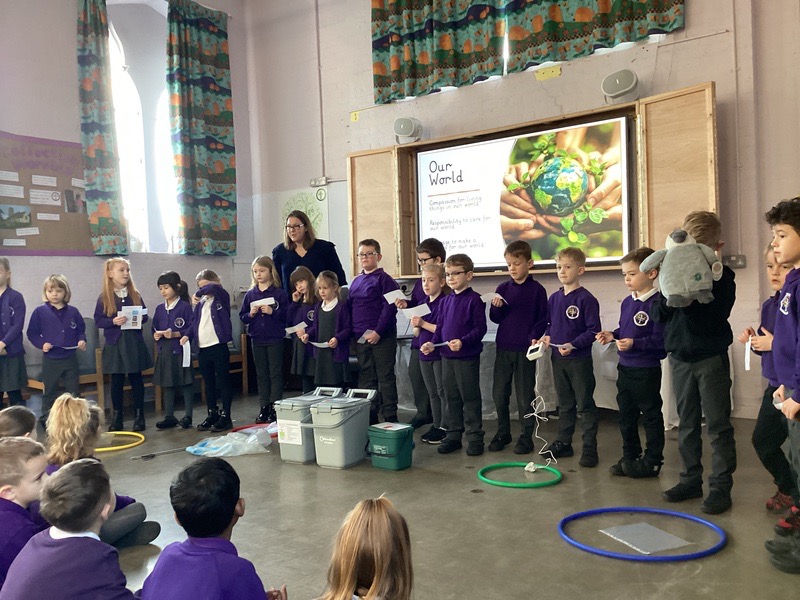
“The Eco-Team will discuss and identify the class each week [by monitoring the classes to see which classes are remembering to turn off lights, shut outside doors and keep the temperature at around 18 degrees] and we will award this in celebration assembly each week.
“We will also move that class up on our Eco-Team display board to keep track of how each class is doing.”
Phenomenal idea!
Pupil leadership – Using data to advocate for change
In a fabulous example of student leadership and the power of data, Horsford Primary’s Eco-Team met the Head Teacher, Mrs Kirton, to question her about her role in saving energy (adapting the Energy Sparks questionnaire).
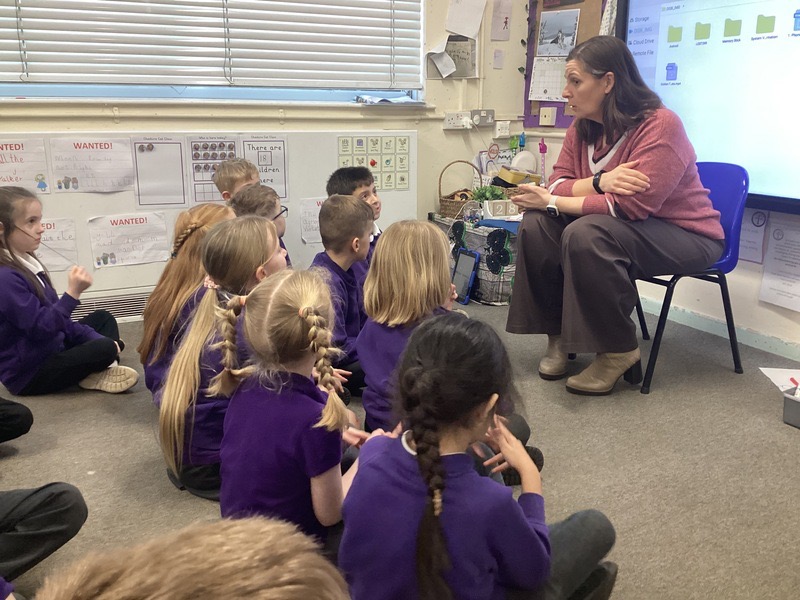
They asked Mrs Kirton what time the heating comes on, and she replied that it is on from 6am-12pm.
The Eco-Team then explained to her that, during their daily monitoring of classroom temperatures, they found that the classrooms are often warmer than the recommended 18 degrees.
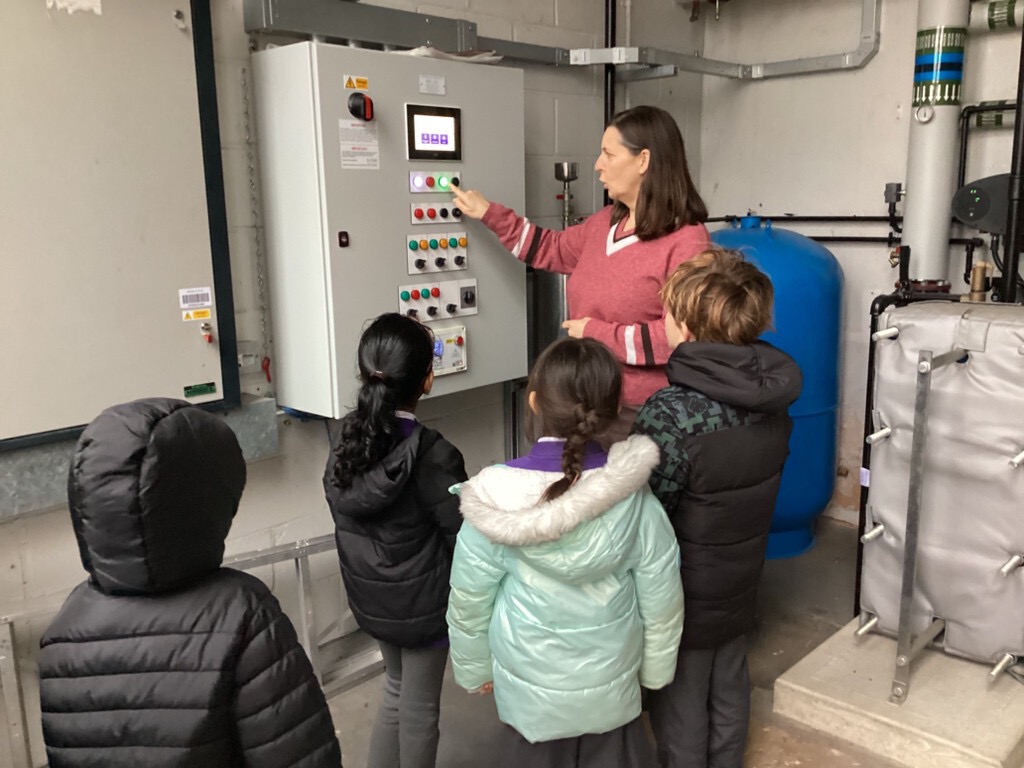
As a result of these discussions, Mrs Kirton agreed to change the heating start time to 7am and reduce the temperature by 1 degree.
Some of the Eco-Team even accompanied her to make these changes to the boiler system with her.
The Eco-Team also made a plan to monitor classroom temperatures during their daily checks, and review how this is going – aiming for all classes to be a comfortable 18 degrees.
4. Assessing progress
To achieve the best possible savings, the fourth step in the cycle is about assessing progress. Ask yourself: are your actions having the desired effect on your school’s energy use?
If the answer is yes: look at your energy saving opportunities and agree on new goals.
If the answer is no: Get curious! Explore your data for clues as to why this might be. Perhaps your heating isn’t performing as expected. Maybe switch-off routines aren’t being followed. Or maybe you have some energy-draining equipment running at unexpected times.
Horsford Primary are making good headway here, with a clear ‘follow up’ mentality. For example:
- Not only do they have classroom switch-off lists, but they have also assigned students to check that these are being followed at break times. They are also doing spot checks on lighting, which have shown that improvements are being made.
- Through ongoing temperature monitoring, they have found that classrooms are now between 18 and 20 degrees, so they have decided to leave the settings as they are and continue monitoring, although the radiators have been turned down in the warmer classrooms.
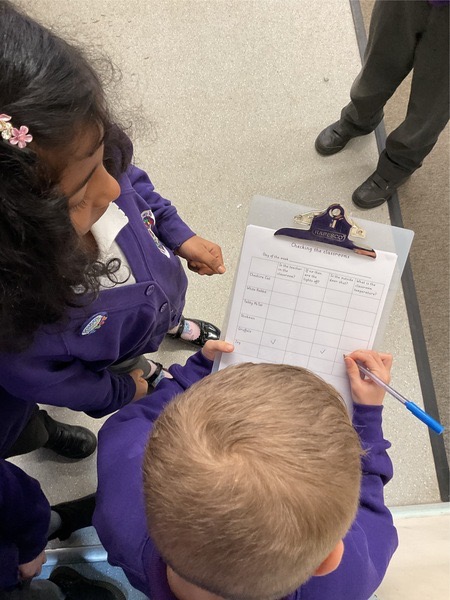
Importantly, they are recording their activities on Energy Sparks, which means that they can view the relationship between what they are doing, and their energy use.
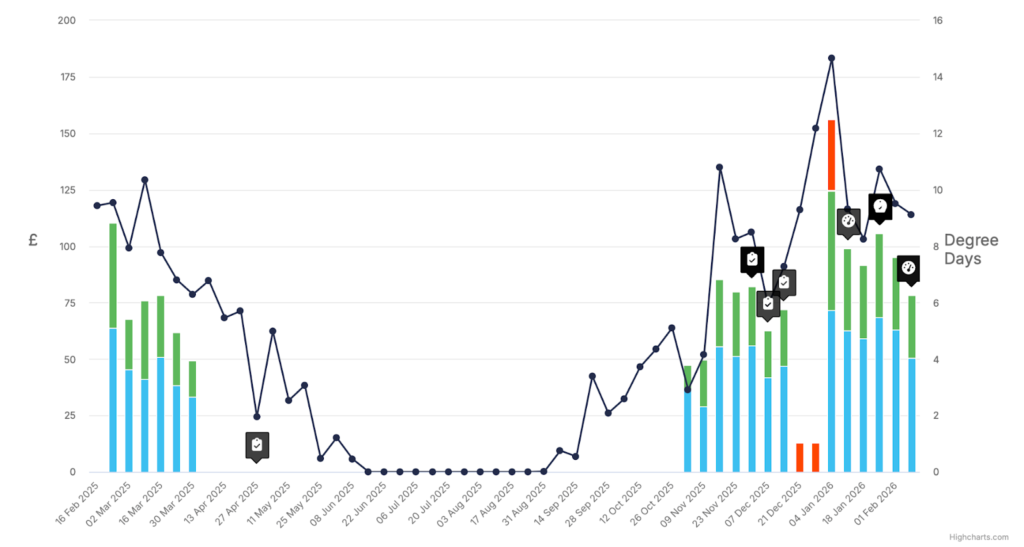
For example, before the holidays the children have been using their holiday switch-off checklist to get everything turned off. They visited each class, reminding staff to turn off their whiteboards and all chargers.
Their gas overview chart below shows how effective this has been – hardly any gas has been used during the holidays (red segments) over the last year, except during one particularly cold spell:
Inspiring their community
One of the reasons why Energy Sparks exists is that we believe young people can play a vital role in changing behaviours outside of the school gates.
Again, Horsford Primary are a shining example. Through initiatives such as Perry the Penguin and their dynamic eco-display in the school hall, they are ensuring that energy saving messages reach the whole school.
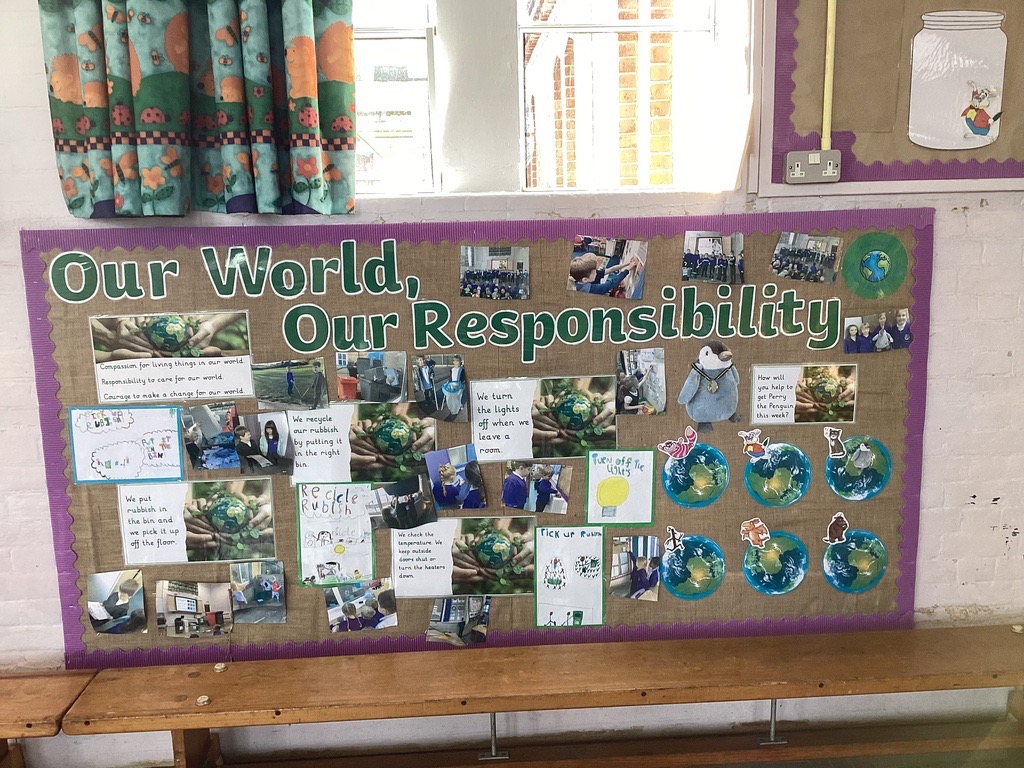
And they have gone a step further: In their school newsletter, they have set a number of home-learning challenges for students and their families to complete – and have discussed how these have gone as part of their Eco-Team discussions.
Follow their example
If you are feeling as inspired as we are, why not see if you can replicate their approach at your school. We have included lots of links in the article above, where you can access further information and resources to help you carry out these activities at your school.
Many of the activities that Horsford Primary have completed are also included in the below key programmes, which are designed to help school communities work together to tackle different energy saving themes:
- Get Energised! – This programme is ideal for schools that are new to Energy Sparks, or who are looking for a good place to get started with energy saving.
- Beat your baseload – helps you reduce the amount of electricity running in the background at your school; this is often one of the fastest ways to reduce your energy bills.
- Give your heating a lie-in – Heating coming on too early is one of the main causes of energy waste at schools. This programme helps you identify if this is a problem at your school, and tackle it if so.
- Smart schools stay at 18 degrees – this programme helps you identify whether your classrooms, offices and other school spaces are at the ideal temperature for learning, and take action if not.
- Switch off for the holidays – the average school uses 60% of their energy when the school is closed to pupils, and around a quarter of that is during the holidays. This programme will help you ensure that your school is not one of them!
